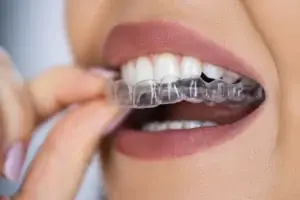
Invisalign vs braces is one of the most common questions patients ask at Signature Smiles Dental Group. Both straighten teeth effectively — but they differ significantly in appearance, comfort, treatment time, daily routine, and cost. This guide breaks down exactly how clear aligners and traditional braces compare, so you can walk into your consultation in Milpitas already knowing the right questions to ask.
What Is Invisalign?
Invisalign is a system of custom-made, removable clear aligners that gradually shift your teeth into position. You wear each set of aligners 20 to 22 hours per day for about one to two weeks, then move to the next set in the series. Because the trays are made of smooth, transparent plastic, most people will never notice you are wearing them.
At Signature Smiles, Invisalign treatment begins with a digital scan of your teeth — no goopy impressions — and a treatment plan that shows a preview of your projected results before you commit.
What Are Traditional Braces?
Traditional braces use metal or ceramic brackets bonded to each tooth, connected by an archwire that your orthodontic provider tightens at regular visits. Braces are fixed in place for the entire treatment, which means they work around the clock without relying on patient compliance — a real advantage for some patients, particularly younger teens.
Invisalign vs Braces: Side-by-Side Comparison
| Factor | Invisalign | Traditional Braces |
|---|---|---|
| Appearance | Nearly invisible clear trays | Visible metal or ceramic brackets |
| Removability | Removable for eating and brushing | Fixed for entire treatment |
| Comfort | Smooth plastic; mild pressure with new trays | Brackets and wires can irritate cheeks and lips |
| Food restrictions | None — remove trays to eat | No hard, sticky, or chewy foods |
| Oral hygiene | Brush and floss normally | Requires special brushing and flossing technique |
| Treatment time | 12–18 months for most cases | 18–24 months for most cases |
| Office visits | Every 6–8 weeks | Every 4–6 weeks for adjustments |
| Best for | Mild to moderate crowding, spacing, relapse cases | Severe rotations, large bite corrections, complex cases |
| Compliance | High — 20–22 hours of daily wear | Low — always working |
Appearance and Confidence
This is where Invisalign wins for most adults and image-conscious teens. Clear aligners let you straighten your teeth without changing how you look in meetings, photos, or video calls. If a discreet treatment matters to your career or social life, aligners are hard to beat. Many patients pair their orthodontic results with teeth whitening afterward as the finishing touch of a complete smile makeover.
Comfort and Daily Life
Both options involve an adjustment period, but the experience differs. New Invisalign trays create gentle pressure for a day or two, then settle in. Braces can cause soft-tissue irritation from brackets and wires, and adjustment appointments often leave teeth sore for several days.
The bigger lifestyle difference is eating. Invisalign wearers remove their trays and eat whatever they like. Braces come with a genuine restriction list: popcorn, nuts, sticky candy, whole apples, and chewy bread can all break brackets and add emergency visits to your treatment.
Oral Hygiene During Treatment
Keeping teeth clean is dramatically easier with aligners — you simply remove them, then brush and floss as usual. With braces, plaque accumulates around brackets, and inadequate cleaning can leave white spot stains on the enamel once brackets come off. If you or your teen chooses fixed braces, review our guide on how to brush teeth with braces and stay consistent with professional cleanings every six months — they matter even more during orthodontic treatment.
Treatment Time and Results
For mild to moderate cases, Invisalign often finishes faster — typically 12 to 18 months versus 18 to 24 months with braces. However, aligner speed depends entirely on wear time. Trays left out of the mouth do nothing, and inconsistent wear is the number one reason Invisalign cases run long.
Invisalign vs Braces Cost in Milpitas
In the Bay Area, Invisalign and traditional braces fall into a broadly similar range, with most comprehensive cases between $3,500 and $7,500 depending on complexity and length of treatment. Several factors affect your final cost:
- Case complexity — minor crowding costs less than comprehensive correction.
- Insurance benefits — many PPO plans include a lifetime orthodontic benefit. We accept most major insurance plans and will verify your orthodontic coverage before treatment begins.
- Payment options — flexible financing and payment plans can break treatment into manageable monthly payments.
Which Should You Choose?
Invisalign is usually the better fit if you:
- Have mild to moderate crowding, gaps, or orthodontic relapse from years ago
- Want a treatment nobody notices at work or school
- Are disciplined enough to wear trays 20–22 hours every day
- Want to keep eating all your favorite foods
Traditional braces may be the better fit if you:
- Need major bite correction or have severely rotated teeth
- Prefer a treatment that works without daily compliance
- Are choosing for a younger teen who may lose or skip wearing aligners
Invisalign in Milpitas — Signature Smiles Dental Group
Dr. Gaganjot Khera, named America’s Best Dentist in both 2024 and 2025, provides Invisalign treatment at our Milpitas office as part of our cosmetic dentistry services. Your consultation includes a digital scan, an honest assessment of whether clear aligners can achieve your goals, and a clear breakdown of cost and timeline. New patients are always welcome, and our multilingual team serves families across Milpitas, Fremont, and San Jose.
Still weighing your options? Browse our frequently asked questions or call (408) 946-0777 to talk it through with our team.
Frequently Asked Questions About Invisalign vs Braces
Is Invisalign as effective as braces?
For mild to moderate crowding, spacing, and many bite issues, Invisalign is just as effective as braces when worn 20 to 22 hours per day. For severe rotations or complex bite corrections, traditional braces still provide more predictable control. A consultation determines which option fits your case.
Is Invisalign faster than braces?
Often, yes. Most Invisalign cases finish in 12 to 18 months, while comprehensive braces treatment typically takes 18 to 24 months. Invisalign timelines depend heavily on consistent daily wear — trays only work while they are in your mouth.
Which costs more, Invisalign or braces?
Costs are broadly comparable, with most comprehensive cases in the Bay Area ranging from $3,500 to $7,500. Final cost depends on case complexity and treatment length. Many dental insurance plans include orthodontic benefits that apply to either option, and financing can spread payments over time.
Does Invisalign hurt less than braces?
Most patients find Invisalign more comfortable. New aligner trays create mild pressure for a day or two, while braces involve bracket and wire irritation plus soreness after each adjustment appointment. Neither should cause severe pain.
Can teenagers get Invisalign instead of braces?
Yes. Invisalign works well for responsible teens with mild to moderate alignment needs, and teen-specific aligners include wear-indicator dots so parents can monitor compliance. For teens unlikely to keep trays in 20-plus hours a day, fixed braces remove the compliance risk entirely.
Can I eat normally with Invisalign?
Yes — that is one of its biggest advantages. You remove the aligners for every meal and snack, so there are no food restrictions. Just brush before reinserting the trays, and only drink plain water while wearing them to avoid staining or trapping sugars against your teeth.
What happens if I don’t wear my Invisalign trays enough?
Teeth drift back toward their original positions, trays stop fitting properly, and treatment stalls or extends. Wearing aligners fewer than 20 hours per day is the most common reason Invisalign cases run past their projected timeline or require new trays.
Do I need a retainer after Invisalign or braces?
Yes — with either treatment. Teeth naturally drift after orthodontic movement, so a retainer is essential to protect your investment. Most patients wear retainers full-time briefly after treatment, then nightly long-term.
Ready to Compare Your Options in Person?
Schedule an Invisalign consultation at our Milpitas office. Call (408) 946-0777 or book online — we will scan your smile and show you a preview of your projected results.
Book Your Invisalign Consultation