Root Canal Pain After Treatment: What’s Normal & When to Worry
You’ve just finished your root canal treatment, and the dentist said you’re done. But when the anesthesia wears off, the discomfort begins. You’re now wondering: Is this normal? How long will it last? When should I call for help?
Root canal pain after treatment is one of the most common concerns we hear at Signature Smiles Dental Group in Milpitas, California. The good news is that most post-treatment pain is normal, expected, and manageable. The better news is that understanding what to expect — and what to watch for — gives you control and peace of mind.
This guide walks you through the timeline of post-treatment discomfort, explains what’s causing it, and helps you identify when you need to reach out to your dentist rather than simply waiting it out.
Normal Pain vs. Red Flags: Quick Reference
Expected Discomfort
Mild to moderate soreness for 3–7 days, manageable with ibuprofen, occasional sensitivity.
Temporary Sensitivity
Slight sensitivity to temperature or biting pressure that gradually fades over days to weeks.
Severe Pain
Throbbing pain unrelieved by medication, or pain that worsens after improving initially.
Swelling or Fever
Facial swelling, fever, difficulty swallowing, or a visible bump on the gum near the tooth.
If you experience intense, throbbing pain that does not respond to over-the-counter medication, visible facial swelling, or signs of infection (fever, facial rash), contact our office immediately or visit an emergency dental clinic. Do not wait.
Why Does Pain Happen After Root Canal Treatment?
To understand post-treatment pain, it helps to know that root canal therapy is an invasive procedure. Your dentist removes the infected or damaged tissue inside the tooth, thoroughly cleans the space, and fills it with a biocompatible material. This process, while necessary to save the tooth, irritates the surrounding tissues — and that’s what causes soreness.
- Inflamed periodontal ligament — The ligament that suspends the tooth in its socket becomes irritated by the treatment process, causing tenderness. This is the primary source of post-RCT discomfort.
- Natural inflammatory response — The body sends immune cells to the area to begin repair, which causes swelling and tenderness. This response, while uncomfortable, is part of normal healing.
- Bite pressure on the treated tooth — If you bite down on the tooth before it’s fully restored with a permanent crown or restoration, you concentrate force on an inflamed ligament, causing sharp discomfort.
- Overextension of filling material — In rare cases, root canal filling material extends slightly beyond the tooth root into the surrounding bone, triggering prolonged inflammation and persistent pain.
- Persistent infection or missed canal — Occasionally, bacteria survive or a small canal is missed during initial treatment, allowing low-grade infection to continue. This results in pain that does not improve or worsens.
The key point: Moderate, manageable discomfort is the body’s normal healing response. Severe pain is not.
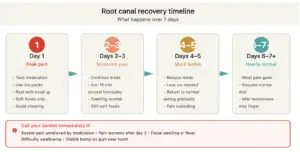
The Post-Root Canal Recovery Timeline
Although everyone heals at a slightly different pace, most patients follow a predictable pattern of discomfort over the days and weeks following root canal treatment. Knowing what to expect helps you distinguish normal healing from a potential problem.
How to Manage Post-Treatment Pain at Home
The right approach to pain management can make the difference between comfortable healing and a miserable week. Start pain management before the anesthesia wears off — don’t wait until you’re in significant discomfort.
Medication Strategy
- Ibuprofen (Advil, Motrin) is most effective for post-RCT pain because it addresses inflammation. Take 400–600 mg every 4–6 hours for the first 2–3 days. Do not exceed 2,400 mg per day without medical guidance.
- Acetaminophen (Tylenol) can be alternated with ibuprofen. Take 500–1,000 mg every 4–6 hours. Never exceed 4,000 mg per day. Some dentists recommend alternating the two drugs every 2–3 hours for better coverage.
- Start medication before pain arrives. If your dentist permits, take ibuprofen or acetaminophen before leaving the office or before the anesthesia wears off. This prevents pain from reaching a high level in the first place.
- Prescription pain medication may be provided for severe discomfort. Take as directed. Do not drive or operate machinery while taking prescription pain medication.
Non-Medication Relief
- Ice packs: Apply ice to the outside of the cheek near the treated tooth for 15 minutes at a time, several times a day during the first 24–48 hours. Cold reduces inflammation and numbs the area.
- Avoid chewing on the treated side: Stick to soft foods like smoothies, yogurt, soup, and mashed potatoes. Avoid hot, hard, sticky, and crunchy foods that can irritate the tooth or dislodge the temporary restoration.
- Rinse with warm salt water: After 24 hours, gently rinse with salt water (1/2 teaspoon salt in 8 oz warm water) 3–4 times daily, especially after eating. This reduces inflammation and promotes healing.
- Rest and elevate your head: Sleep with your head elevated on extra pillows to reduce swelling. Get adequate sleep — rest supports healing.
- Stay hydrated and eat well: Drink plenty of water and eat nutritious foods to support your immune system and healing.
When Post-Treatment Pain Signals a Problem
Most post-treatment discomfort resolves within one to two weeks. If your pain doesn’t follow the expected recovery pattern or is accompanied by other symptoms, it’s time to contact your dentist — even if you’re not sure whether it’s urgent.
- Severe, throbbing pain that doesn’t respond to ibuprofen or acetaminophen
- Pain that improves for a few days, then suddenly worsens
- Facial swelling, especially if it worsens after day 2
- Fever (body temperature above 101°F / 38.3°C)
- Difficulty swallowing or opening your mouth
- A pimple-like bump on the gum above or below the treated tooth
- Pain that persists beyond two weeks
- Any symptom that concerns you — trust your instincts
Most complications are easily managed with a simple adjustment or follow-up visit, but they need prompt attention. Do not assume pain will resolve on its own if it doesn’t follow the expected timeline. Calling for guidance protects your tooth and your peace of mind.
Special Case: Pain from Your Temporary Crown
After root canal treatment, your tooth typically receives a temporary restoration to seal it while you wait for your permanent crown to be made. Sometimes, the temporary crown causes pain or discomfort — and this is usually fixable.
Common causes of temporary crown pain:
- High bite: The crown is slightly too high, concentrating all your bite force on the inflamed tooth. Your dentist can easily adjust the crown to redistribute the bite pressure.
- Rough edges: The temporary crown may have sharp or rough areas irritating your cheek or tongue. Your dentist can smooth these edges in minutes.
- Loose fit: A slightly loose temporary crown can move on the tooth, irritating the inflamed surrounding tissue.
If your temporary crown is causing pain, contact our office. Do not try to adjust it yourself. A simple in-office adjustment usually resolves the issue. Pain from a temporary crown does not mean your root canal failed — it often resolves completely once the permanent crown is placed.
Signature Smiles Endodontic Services in Milpitas
At Signature Smiles Dental Group, our approach to root canal treatment emphasizes patient comfort during and after the procedure. We use modern techniques, local anesthesia, and sometimes nitrous oxide to minimize discomfort during treatment. Post-operatively, we provide clear instructions, manageable pain relief protocols, and responsive support if complications arise.
If you’re experiencing post-treatment pain or have any concerns about a root canal, we’re here to help. Our team is available to answer questions and address problems promptly.
Frequently Asked Questions: Root Canal Pain
Pain After Root Canal? We’re Here to Help
Whether you’re experiencing post-treatment discomfort or have concerns about a root canal procedure, Signature Smiles Dental Group in Milpitas, CA is ready to evaluate and assist you.
Schedule a Follow-Up Appointment Or call (408) 946-0777 · 440 E Calaveras Blvd, Milpitas, CA 95035